Open now
Jio Platforms IPO
Reliance's telecom and digital arm, India's largest mobile operator.
2.38xsubscribed · as of 21 Oct, 3:00 pm · HDFC Sky
Every mainboard IPO in one place: price bands, lot sizes, subscription by investor category, listing dates and listing gains, plus a daily lesson on how IPOs work. Data as of 21 Oct 2026, 4:45 pm IST. Grey market premium is unofficial and shown only for context.
Reliance's telecom and digital arm, India's largest mobile operator.
Runs eight hospitals with 2,211 beds in North India, Bihar and Jharkhand under the Paras Health brand.
Defence-technology company making imaging and night-vision systems.
Your daily IPO class: what's open, what listed, what's coming, and one concept explained simply.
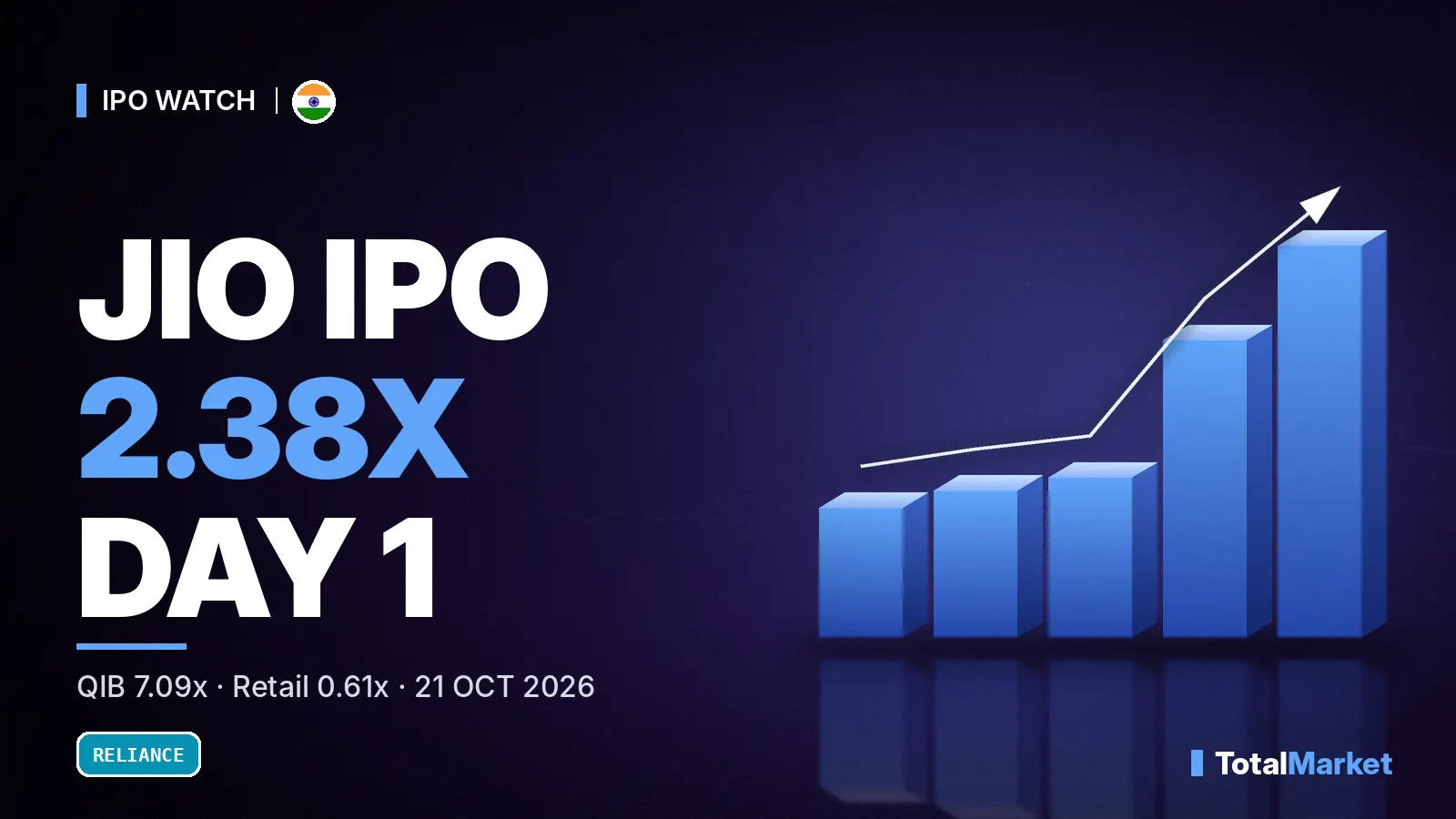
Bids for about 47 crore shares came in on the first day of India's biggest IPO.
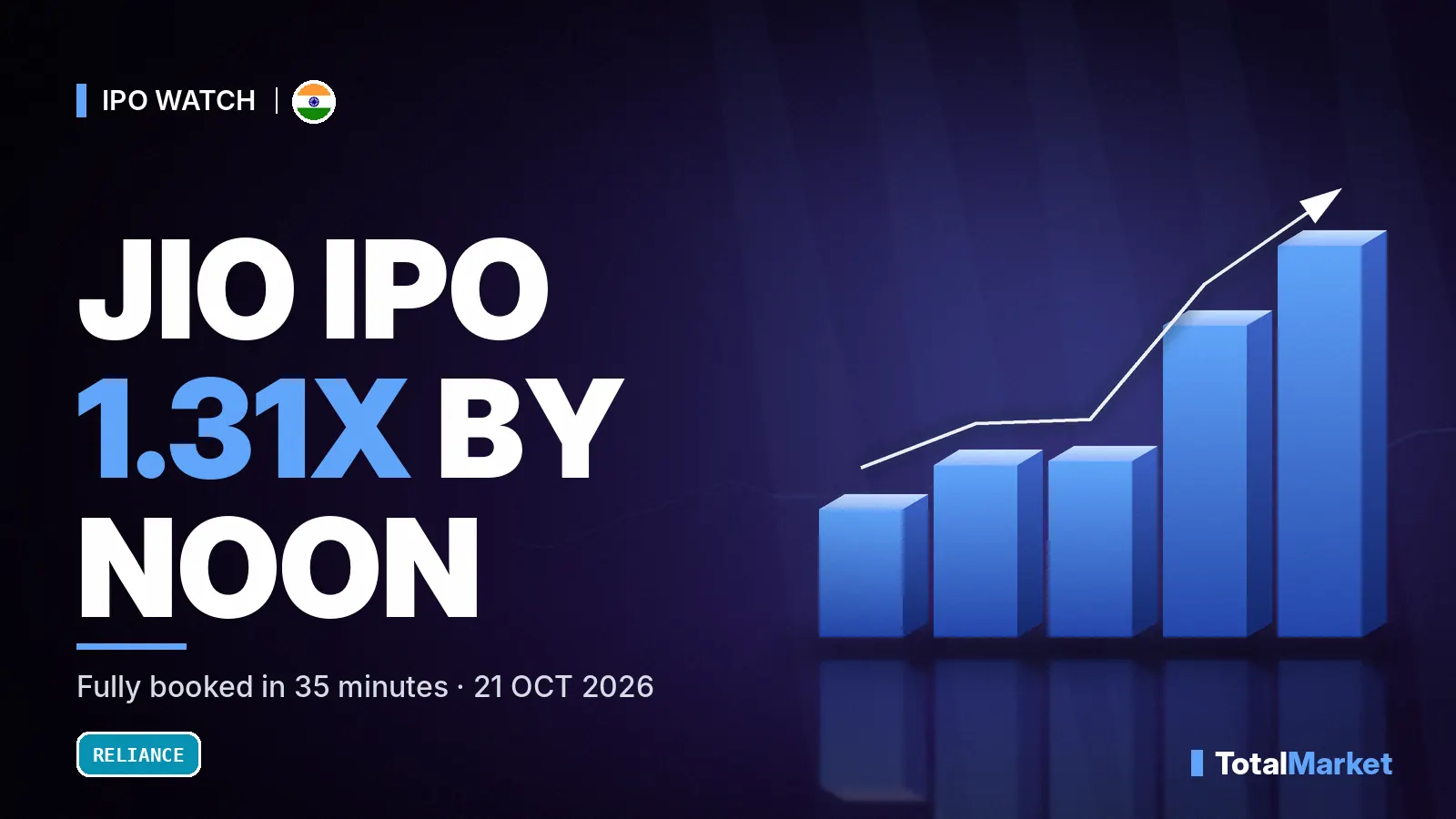
Big institutions rushed in first; retail and HNI investors have two more days to bid.
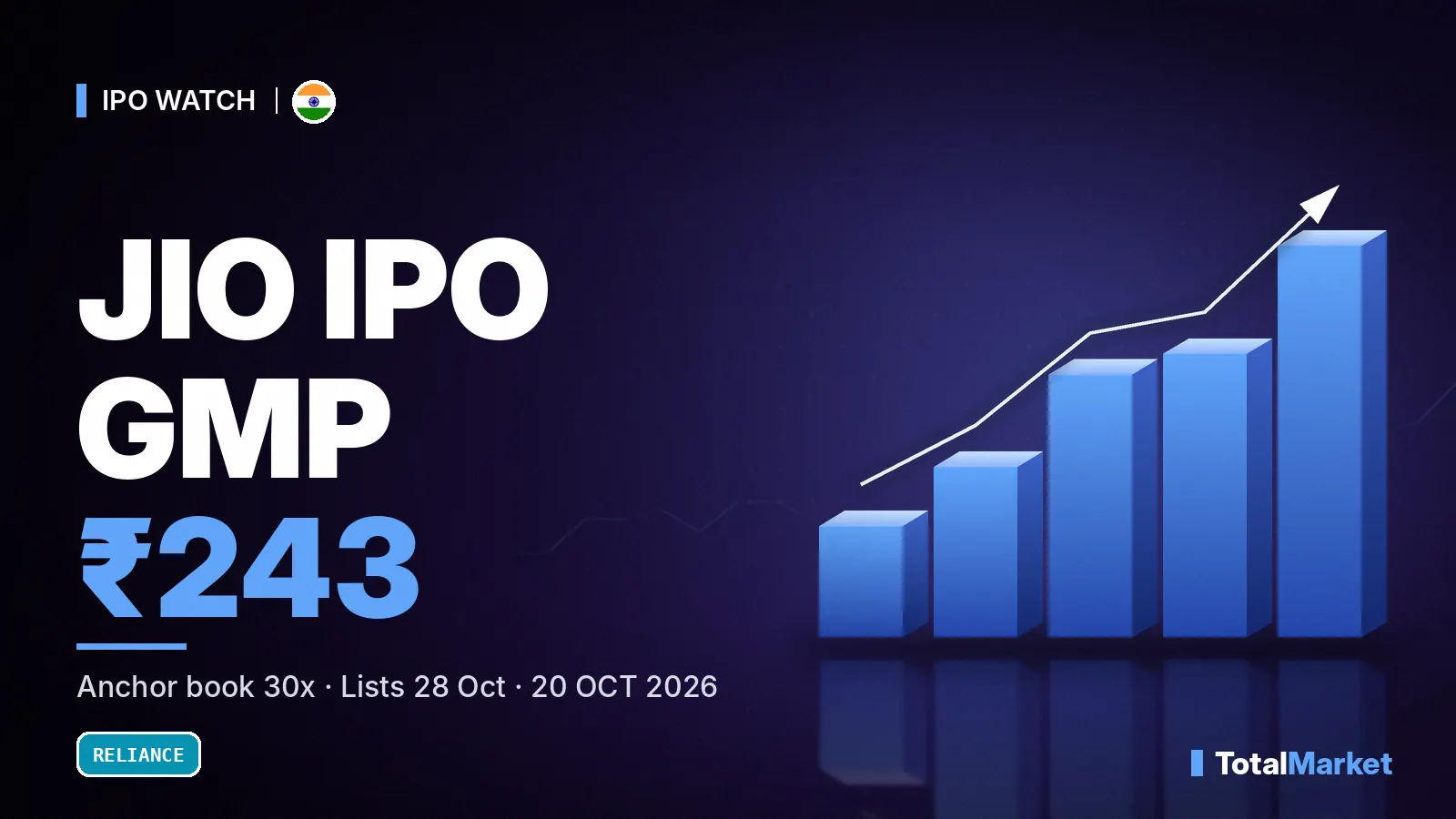
Grey-market traders price Jio Platforms near ₹1,362 ahead of its 28 October debut, after anchors bid over ₹2.5 lakh crore. Here is what those signals do and don't tell you.
A roughly ₹30,000 crore issue runs 21–23 October; Paras Healthcare also lists this week.
DailyObjects, Clueso and Mesa School of Business also closed rounds.
Nine issues hit the market last week, from a ₹5,012 crore Zetwerk offer to small SME listings.
The AI chipmaker's Series E values it at $6.2 billion.
601 rounds and $31.9B raised in 30 days, with AI taking the biggest share.
An initial public offering is the first time a company sells its shares to the public. After the IPO, the shares trade on NSE and BSE like any other stock.
The company sets a range, say ₹660–693. Investors bid within it; the final price is usually the top of the band. Retail investors can tick 'cut-off' to accept whatever final price is set.
You apply in fixed bundles called lots. If the lot is 21 shares and the top price is ₹693, the minimum application is 21 × ₹693 = ₹14,553.
In a fresh issue the company creates new shares and keeps the money. In an OFS, existing owners sell their shares and the money goes to them, not the company.
Big institutions that buy a part of the issue one working day before it opens. Half their shares are locked for 30 days and the rest for 90 days, so their lock-in end dates can bring selling.
The issue is split by investor type: QIBs (mutual funds, insurers, foreign funds), NIIs or HNIs (individuals applying above ₹2 lakh) and retail (up to ₹2 lakh). Each quota has its own subscription number.
Investors applied for 10 shares for every share on offer. When retail is oversubscribed, lots are allotted by a computerised lottery, so many applicants get nothing.
An unofficial price quoted by dealers before listing. It is unregulated, not recognised by SEBI or the exchanges, and often wrong. Treat it as gossip, not data.
When you apply, the money is only blocked in your bank account, not taken. If you get no shares, the block is released; if you do, only the allotted amount is debited.
The Red Herring Prospectus is the official offer document. Look at the use of proceeds, how much is OFS, debt levels, profit history, pending legal cases and how the price compares with listed peers.
SME IPOs are small companies on the NSE Emerge or BSE SME platforms, with bigger minimum lots and thinner trading. They carry higher risk than mainboard IPOs.
For information and education only. TotalMarket does not recommend applying for or avoiding any IPO.